

Traditionally, the physical security of facilities has been a distinct discipline from the logic security of IT systems and data. Physical security was viewed as an extension of building operations to be handled by facilities managers. Their responsibilities included managing security cameras, mechanical locks, guard services and facility access.
Physical security and IT security are no longer separate conversations because modern technology has completely blurred the lines between digital and physical assets. Today, a breach in one domain often compromises the other.
Small to midsize enterprises (SMEs) in particular can benefit from unifying physical and IT security. Integrating these two domains can help reduce costs and administrative overhead while eliminating blind spots that create organizational risks. However, it’s critical to choose the right solution to ensure long-term value.
Why Unifying Physical and IT Security Makes Good Sense
Physical and IT security still operate in silos in many SMEs, with different groups managing distinct technology stacks that don’t communicate with one another. Security experts now agree that this model creates significant risks.
Separate teams miss complex blended attacks that use physical distraction to mask digital intrusion. Communication gaps between departments delay critical incident containment during active breaches. Siloed physical and IT security can also waste resources. Independent teams often purchase overlapping technologies that cannot share data with each other.
Additionally, modern security devices run on IP networks. Hackers can exploit a physically vulnerable device to penetrate corporate systems.
By unifying physical and IT security, SMEs gain several operational and strategic benefits. Combining teams creates a comprehensive view of organizational risk. Consolidating security operations centers (SOCs) reduces software licenses, duplicate hardware costs and related management overhead. It also helps comply with modern regulations that demand strict protection for both digital data and the physical servers housing it.
The Convergence of Cyber and Physical Threats
Integrating physical and IT security tools that operate as distinct technology platforms often seems like a monumental task. SMEs must choose between stitching together their existing platforms or implementing a modern system.
One approach is to deploy a security information and event management (SIEM) or extended detection and response (XDR) platform. These tools can collect logs from both IT networks and physical security tools. This path may be the best option for SMEs that have functional security hardware and limited budget.
However, legacy physical security logs are notoriously messy, making them difficult to integrate. Physical security devices also generate a large amount of low-value data, leading to skyrocketing costs and alert fatigue. This approach also creates a support nightmare, forcing IT staff to spend hours troubleshooting issues.
A better approach is to standardize on a hybrid cloud solution. Smart devices inherently talk to IT systems, providing administrative simplicity. While this approach requires upfront investments, cloud platforms shift most costs to a monthly subscription model.
How Verkada Helps Bridge the Gap
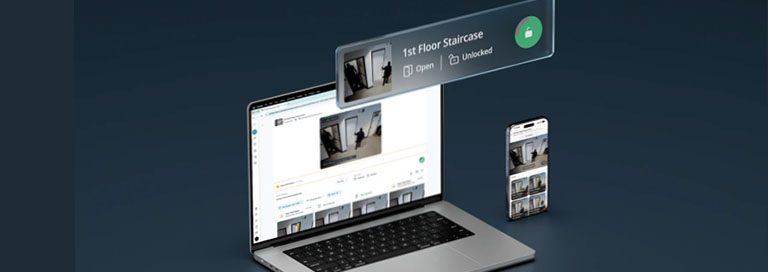
Verkada approaches physical security as an extension of the IT infrastructure. A key feature is native IT identity management. Verkada Command natively integrates with leading identity platforms. Physical access rules are governed by the same policies governing access to IT resources. Deactivating an IT account instantly terminates the user’s physical workspace access.
The Verkada physical security platform also eliminates network video records and local servers. Every Verkada device functions as an enterprise-grade IoT endpoint requiring only a Power over Ethernet (PoE) connection. Devices use hybrid-cloud storage and communicate with the cloud via encrypted metadata, consuming minimal bandwidth.
By unifying the incident response window, Verkada enables IT teams to spot coordinated digital and physical breaches. Verkada’s Integration Network feeds physical telemetry into IT monitoring and communication tools. Real-time video clips of security anomalies automatically route to IT team channels for rapid validation.
How Verteks Can Help
Verteks is a Verkada partner with the expertise to design, implement and support the full suite of Verkada solutions. We also have networking experts on staff who can integrate Verkada devices with your existing IT infrastructure. Let us assess your physical and IT security systems and develop a modern platform that optimizes costs, streamlines your operations and provides peace of mind.